The design world doesn't need another AI assistant. It needs a tool that actually understands context, brand systems, and creative intent. Claude Design, Anthropic's multimodal expansion, might be that tool. But like every powerful capability that arrives ahead of its ecosystem, it comes with trade-offs that most early adopters are only now discovering.
What Claude Design Actually Does
Unlike point-solution tools that specialize in one vertical, Claude Design operates across three critical creative domains. It's not trying to replace Figma or Adobe. It's attempting something more ambitious: collapsing the friction between idea and artifact.
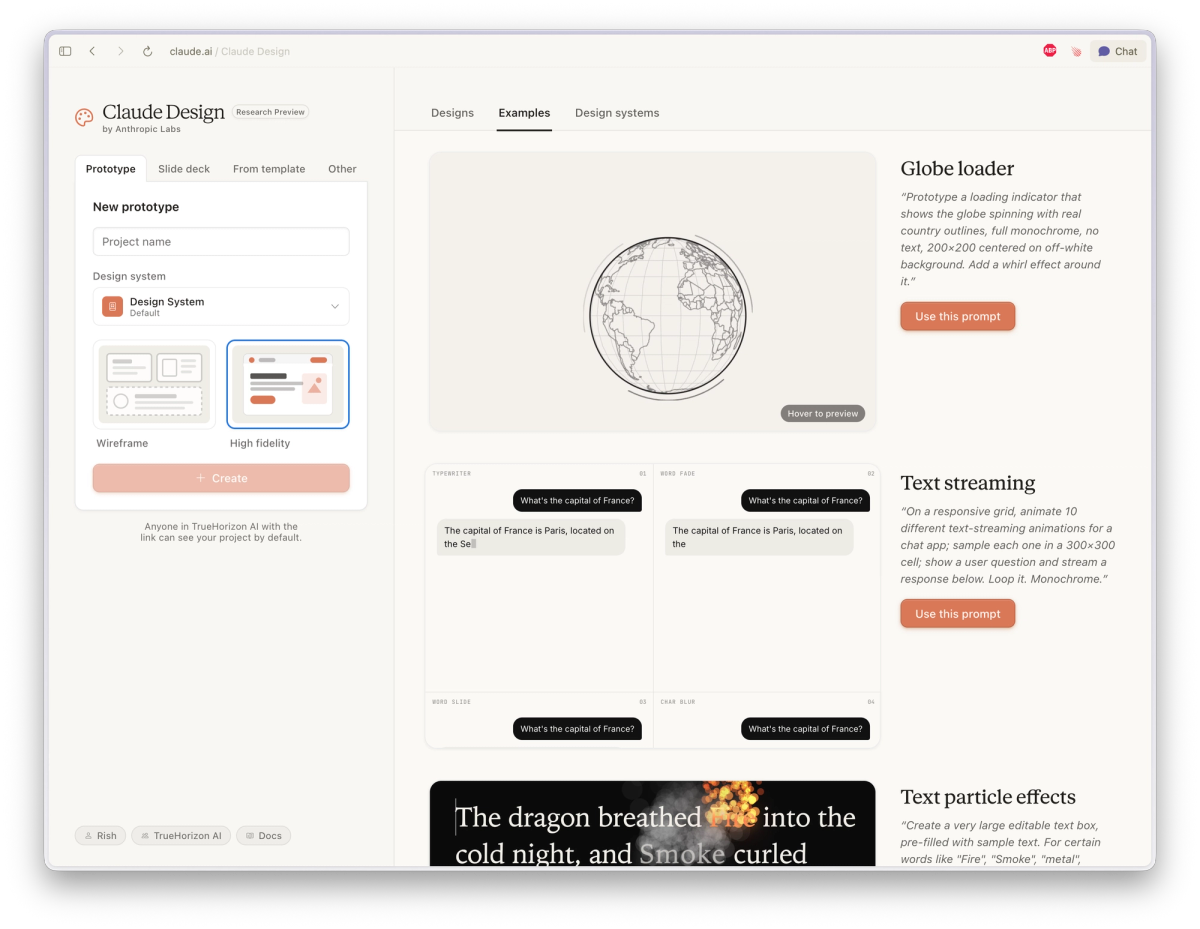
First, presentation design. Feed Claude a thesis, a dataset, or even a rough outline, and it generates slide decks with intelligent hierarchy, visual balance, and thematic consistency. It doesn't just template-fill. It interprets structure. The result feels less like automation and more like collaboration with a junior designer who intuitively grasps your narrative arc.
Second, video creation. This isn't generative video in the Runway or Pika sense. Claude Design handles scripting, storyboarding, scene sequencing, and even suggests timing for cuts and transitions. When paired with existing footage or stock libraries, it becomes a powerful editing copilot. You're still the director. Claude just removed 80% of the grunt work.
Third, and perhaps most disruptive: website design and prototyping. Describe your brand, your audience, and your conversion goals. Claude outputs functional HTML/CSS structures, suggests component hierarchies, and even adapts layouts for responsive breakpoints. It won't replace your dev team, but it will radically compress the gap between wireframe and working prototype.
The Guardrails You Need to Know
Power without constraints is chaos. Claude Design ships with intentional limitations that separate exploratory use from production-grade workflows.
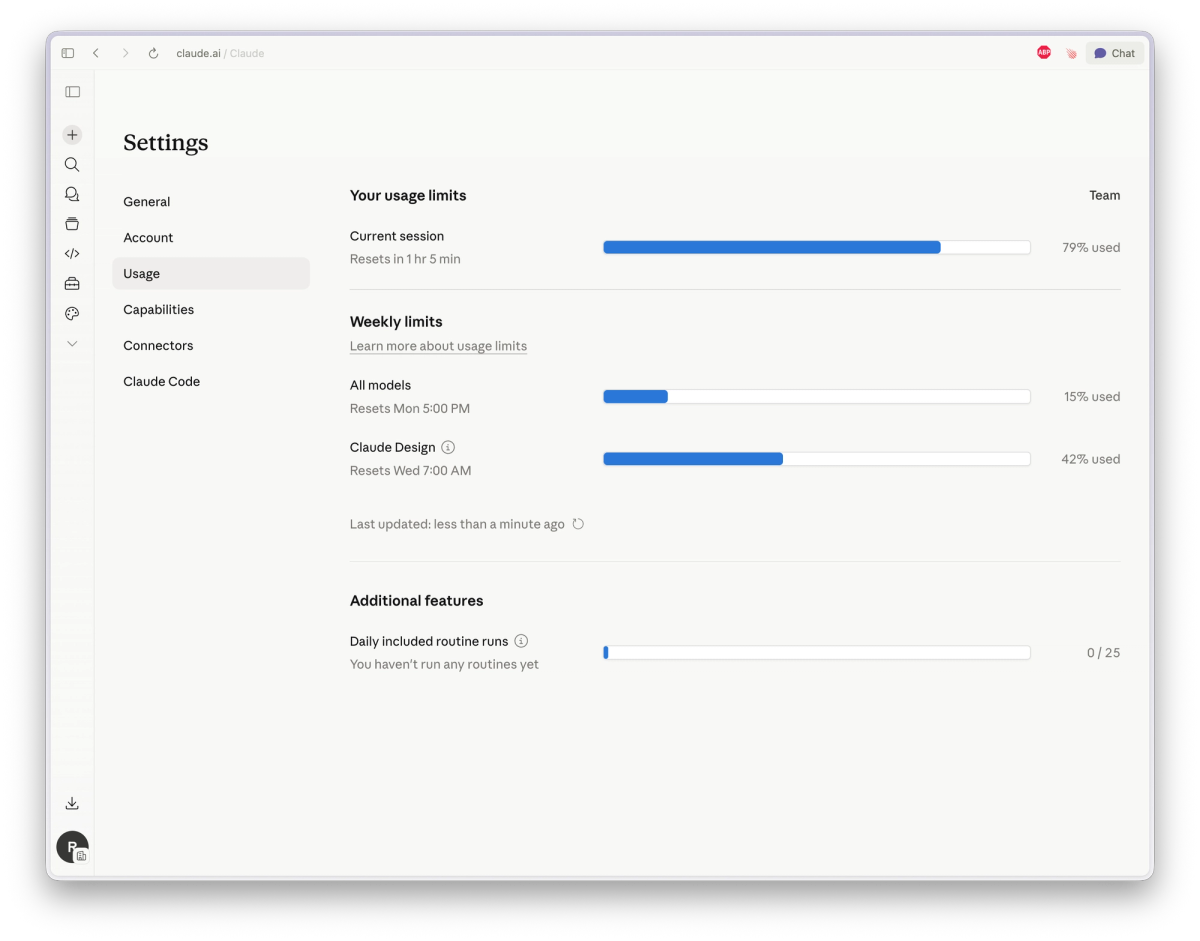
The weekly usage cap is the most immediate friction point. Anthropic throttles heavy design generation to manage compute costs and prevent abuse. If you're a solo founder or small team experimenting, you'll hit this ceiling fast. Plan your creative sprints accordingly. Don't waste tokens on throwaway mockups.
Then there's the system setup hurdle. While Claude Design can now ingest codebase tokens and Figma libraries, it isn't 'plug-and-play' perfection. Without a clean connection to your brand's Git repo, you’ll experience visual drift—colors that are 'brand-adjacent' rather than brand-accurate.
Even with the new Point-and-Edit UI, spatial precision remains an LLM quirk. A request to 'nudge' a button can still trigger a full layout reflow. It’s a reminder that while Claude understands the intent of design, it still occasionally struggles with the math of a coordinate-based canvas.
Why This Matters More Than You Think
The strategic value isn't in replacing designers. It's in compressing decision cycles. Startups can test five brand directions in an afternoon instead of waiting weeks for agency rounds. Product teams can prototype user flows without pulling engineers off roadmap work. Marketing can spin up campaign assets without bottlenecking on creative ops.
There's also a psychological shift. When design becomes conversational, the barrier to iteration drops to zero. You stop agonizing over whether an idea is 'good enough' to brief out. You just test it. This changes how teams think about creative risk.
For enterprises, the efficiency math is staggering. A Fortune 500 brand team might cut deck production time by 60%. A content studio could double video output without hiring. A SaaS company could A/B test landing pages at a pace that actually matches their experimentation culture.
But perhaps the most underrated benefit is creative scaffolding. Even if you throw away Claude's first draft, it gives you something to react to. It breaks the tyranny of the blank canvas. For non-designers who need to communicate visually, that alone is transformative.
The evolution doesn't stop at the visual, though. Once that scaffolding is solid, the transition to Claude Code is where the true power of the ecosystem reveals itself. Because the design environment and the terminal-based agent share the same underlying logic, you can move from a high-fidelity prototype to a production-ready repository in minutes. You aren’t just looking at a mockup anymore; you’re looking at the first commit of a live product.
The Real Question Isn't If, But When
Claude Design won't obsolete your creative team. It will, however, redefine what 'creative work' means. The repetitive, templated, low-context stuff disappears. What remains is taste, strategy, and the kind of judgment that only comes from years of shipping.
If you're leading a team, the calculus is simple. Ignore this, and you'll watch competitors move faster. Adopt it blindly, and you'll drown in off-brand mediocrity. The smart play? Controlled experiments. Pick one workflow. Test Claude against your existing process. Measure speed, quality, and creative satisfaction.
The tools that win the next decade won't be the ones that do everything. They'll be the ones that collapse time between intention and execution. Claude Design is an early, imperfect step in that direction but it's worth your attention.

Written by
Rishabh (Rish) Kaushick
AI Engineer
Rishabh as an AI Engineer at TrueHorizon AI, focused on developing practical AI solutions that automate business workflows and connect data across platforms. Specializes in building backend logic, system integrations, and intelligent processes that transform fragmented operations into streamlined, reliable pipelines. Collaborates closely with product and engineering teams to deploy production-ready systems that improve efficiency and make AI usable in real-world business environments.